IMPLEMENT TO TAKE SAMPLE FOR ANALYSIS WHEN SUSPECTING DECLARATION

VCN – Customs authorities will take a sample of the goods items under Non-sampling catalog for analysis that having doubt in inaccurate declaration or cheating. They will do self-classification base on the analysis result of Customs Inspection Department. 

implement to take sample for analysis when suspecting declaration
Customs officer at Assessment Department analyzed a sample of goods. Photo: Mạnh Hùng

This is a direction of General Department of Customs to answer the question of HCMC Customs Department in determining HS code of exported aluminum ingot.

According to the analysis of General Department of Customs, Clause 1, Article 3 of Circular No. 14/2015 / TT-BTC of the Ministry of Finance stipulates: “In the case that customs authorities have not enough evident to determine accurately the goods classification, they will conduct analysis to classify the goods. “

In addition, at Point 4 of Official Letter 11314 / TCHQ-TXNK dated 1/12/2016, the General Department of Customs has also provided detailed guidance: in the case that declared goods items are in the Non-sampling catalog for analysis but it is suspected of having inaccurate declaration or cheating, the units will be carrying out customs procedures as for goods not included in the Non-sampling catalog for analysis.

Accordingly, for difficulties in determining HS code of exported aluminum ingot items, the General Department of Customs requests that the HCMC Customs Department to take samples for analysis of that items and do self-classification base on the analysis results of the Customs Inspection Department.

By Thu Trang/Thanh Thuy

Source: http://customsnews.vn/

NYK, K LINE END YEAR IN LOSSES, MOL DELIVERS PROFIT

Japanese Big Three shipping companies have posted mixed financial results for the fiscal year ended March 31, 2017, as only Mitsui O.S.K. Lines (MOL) wrapped up the year with profits.

The worst hit was the Nippon Yusen Kabushiki Kaisha (NYK Line) which saw a net loss of JPY 265.7 billion at the end of the year, compared to a net income of JPY 18.2 billion reported in the previous fiscal year.

The company’s revenues for the period were down to JPY 1.92 trillion from JPY 2.27 trillion reported a year earlier, while its operating loss stood at JPY 18 billion, compared to an operating income of JPY 48.9 billion seen in the fiscal year 2016.

Although the overall freight rate market showed a gentle recovery from the historically low levels at the beginning of the year 2016, business performance
declined year on year, NYK Line’s compatriot Kawasaki Kisen Kaisha (K Line) said.

On the back of such business environment seen in the shipping industry, K Line informed that its loss widened during the year, reaching JPY 139.4 billion, compared to a loss of JPY 51.4 billion seen in the period ended March 31, 2017.

Additionally, K Line said that its revenues for the year dropped to JPY 1.03 trillion from JPY 1.24 trillion, while it reported an operating loss of JPY 46 billion, compared to an operating income of JPY 9.4 billion in fiscal year 2016.

“In the containership business, cargo movements shifted to an upward trend in the second-half of the fiscal year, mainly in the East-West services; however not sufficient to recover the slump in the freight market at the beginning of the fiscal year and loss increased year-on-year,” K Line said.

The dry bulk market has also lifted out of the historically low levels at the start of the year and “is on a course for recovery.” While the vessel supply-demand gap is on the way to improve, “the market conditions were weighed down.”

K Line informed that it worked on measures to improve profitability, however, “business performance declined year-on-year.”

Image Courtesy: Hamburg Hafen

Out of Japan’s Big Three shipping firms, MOL was the only to end the fiscal year with a net income, despite a decrease in its revenues.

Namely, the shipping firm’s net income stood at JPY 5.2 billion, bouncing back from a net loss of JPY 170.4 billion seen in the previous year.

While the company’s operating profit reached JPY 2.5 billion, remaining almost the same as a year earlier, MOL’s revenues dropped to JPY 1.5 trillion from JPY 1.71 trillion in the respective periods.

“Looking at the maritime shipping market conditions, the dry bulkers experienced intensive chartering activities by major shippers in western Australia and an increase in the volume of coal imports in China, allowing to avoid a record low hit in the fourth quarter of the previous fiscal year,” MOL said.

The company added that, although the dry bulker market continued to experience suppression of market rises, in late 2016, firm iron ore shipments from major ports in Brazil and increased North American grain shipments pushed the market to once again rise and exhibit an overall trend of recovery.

Looking at the current fiscal year ending March 31, 2018, MOL said that its expects its profit to reach JPY 10 billion. Similarly, the company forecast a rise in its operating profit which could reach JPY 9 billion, while its revenue is now expected to increase to JPY 1.61 trillion for the fiscal year from April 1, 2017 to March 31, 2018.

World Maritime News Staff

Source: http://worldmaritimenews.com/

WCO ACTS GLOBALLY TO PROTECT IPR

VCN- The World Customs Organization (WCO) is pleased to join the international community in celebrating World Intellectual Property Day 2017 under the theme “Innovations – Improving Lives,” as it provides an ideal opportunity to underline Customs’ important role in the protection of intellectual property rights (IPR) at borders.

wco acts globally to protect ipr

The WCO also coordinates enforcement operations specifically focusing on IPR infringements.

Faced with intense globalization, international trade and global supply chains are significantly more complex than ever before, posing a constant challenge to Customs authorities around the world as they strive to achieve a balance between regulating and facilitating trade.

Protecting the IPR of goods being shipped globally falls in this category as well: How to protect society from harmful counterfeit goods entering the market whilst not impeding the flow of genuine merchandise? For the WCO, protecting society from counterfeit goods that can lead to severe health and safety issues is, and will remain, high on its agenda.

“Intellectual property is crucial to the growth of our society as it fosters innovation and modernization in countless areas such as medicines, transportation, energy, and ICT to name a few. On this special day, I would like to reaffirm the WCO’s dedication to protecting artistic creation and preserving a vibrant industrial fabric by actively engaging and leading Customs in the global fight against counterfeiting and piracy,” said WCO Secretary General Kunio Mikuriya.

Thanks to its exhaustive IPR, Health and Safety Programme, revolving around raising awareness and providing capacity building activities, the WCO dedicates important resources to the fight against counterfeiting and piracy on a yearly basis.

In 2016 alone, the WCO carried out IPR-related capacity building activities in some 62 countries covering all six WCO regions of the world. Further to these workshops, the WCO also coordinated two main enforcement operations in 2016: Seascape and ACIM.

Seascape, an initiative within the Americas region aimed at curbing the counterfeiting trade phenomenon before the inauguration of the Olympic Games in Rio de Janeiro, generated significant results in the clothing, accessories and games area, registering a total seizure of 4.6 million articles.

ACIM, which mobilized 16 Customs administrations in the African region to fight against illicit medicines, resulted in the detention of some 129 million articles, most of them illicit pharmaceutical products.

As counterfeiting and piracy grow steadily, the threat it poses to the global economy and to society is also increasing, causing concern to all industry sectors as counterfeit and pirated products are now widespread and contaminate legal markets across the globe.

As Customs administrations are responsible for protecting national borders from the illegal flow of counterfeit and pirated goods, as well as other illicit products, the WCO continues to lead discussions on global efforts to fight such crimes.

By Ha Nhi

Source: http://customsnews.vn/

BRAZIL INITIATES ANTI-DUMPING PROBE ON WELDED STEEL PIPES

The foreign trade secretariat of Brazil has announced it has begun an antidumping duty investigation on imports of welded austenitic stainless steel pipes from Vietnam, Malaysia and Thailand.

brazil initiates anti dumping probe on welded steel pipes

The inquiry is predicated upon a complaint filed by Aperam Inox Tubos Brasil Ltda and Marcegaglia do Brasil Ltda covering the period between October 2015 and September 2016.

The goods in question fall under Custom Tariff Statistics Position Numbers 7306.40.00 and 7306.90.20.

Source: VOV

YANG MING HALTS SHARE TRADING

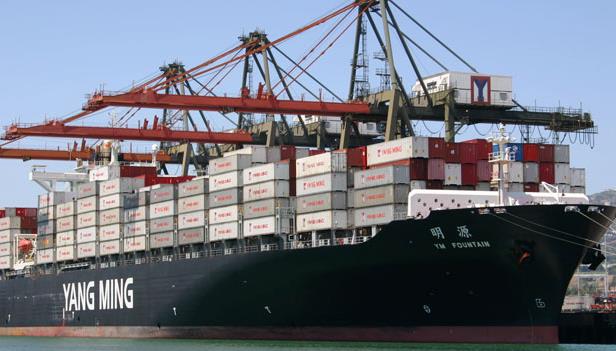
Taiwanese shipping company Yang Ming Marine Transport Corporation (Yang Ming) has voluntarily suspended the trading of its stock on the Taiwan Stock Exchange from April 20 to May 3, 2017.

The suspension is a “standard procedure” amid the company’s recapitalization plan announced earlier this year, according to Yang Ming. The recapitalization plan is said to be one of the several components of Yang Ming’s comprehensive plan aimed at improving the company’s financial structure.

“Our recapitalization plan will initially allow Yang Ming to reduce its equity capital, after which infusion of new capital is then obtained from various private and public investors,” the company said.

The company did not disclose the identity of its investors saying that it would do so “at the appropriate time”.

During the pause, Yang Ming’s outstanding issued shares will be reduced to an approximate 1.4 billion shares, with a new share value anticipated to be about two times the share price prior to April 19.

Other components of Yang Ming’s plan include measures to improve the company’s operational efficiency and reduce its cost.

Furthermore, according to the recent reports from Reuters citing a company source, Yang Ming has cut its container service to Iran due to concerns about rising tensions in the country.

When contacted, Yang Ming told World Maritime News that it “ceased the service to Iran due to loop services adjustment”. 

In 2016, Yang Ming posted a full-year net loss of USD 493 million, significantly widened when compared to a loss of USD 258 million seen in 2015.

Nevertheless, due to recent improvements in the shipping sector, along with increased cargo volumes, Yang Ming said that it has cut its business loss for the 4th quarter of 2016 to NTD 1.88 billion (USD 62 million), and that it “remains optimistic for continued improvements into the 1st quarter of 2017.”

Source: http://worldmaritimenews.com/

APL ENHANCES CHINA-INDONESIA COVERAGE

Singapore-based container shipping company APL, part of French CMA CGM, is launching the China Southeast Asia Service 6 (CS6), a new weekly service connecting North and Central China with Indonesia.

The company said that the new CS6 service complements its China-Southeast Asia Service 1 (CS1) that serves the South China-Indonesia trade lane.

The service will offer shippers a direct connection from key North China exports areas in Lianyungang and Qingdao to the major Indonesian cities of Jakarta and Surabaya, according to APL.

The first sailing of the new CS6 service will commence from Lianyungang on April 26, 2017.

The CS6 service will call the ports of Lianyungang, Qingdao, Shanghai, Ningbo, Shantou, Hong Kong, Jakarta, Surabaya, North and South Manila.

Source: http://worldmaritimenews.com/

CONTINOUS EXPORT SURPLUS TO CAMBODIA

VCN- The statistics of the General Department of Customs show that, in recent years, Vietnam has remained the state of export surplus to the Cambodian market.

continous export surplus to cambodia
Chart of the value of import-export turnover between Vietnam and Cambodia in period 2011-2016, the unit of “billion USD”. Chart: T.Bình.

In particular, in 2011, the total import-export turnover between the 2 countries reached $US 2.84 billion, in which the Vietnam’s exports were $US 2.41 billion, and the imports from Cambodia were near $US 430 billion and trade surplus reached $US 1.98 billion.

By 2013, the export surplus from Vietnam to the country reached the highest point of $US 2.4 billion, accounting for 83% of the total export value of our country to Cambodia. In 2016, despite the decrease, the level of trade surplus still reached $US 1.5 billion.

In the two-way trade of Vietnam with the ASEAN’s countries, Cambodia ranked number 6 in terms of the export and number 7 in terms of the import in 2016. Despite being neighbouring countries, the import-export activities between Vietnam and Cambodia are not commensurate with the potential of the two countries. The total import-export volume with the country over years have accounted for a very small proportion of the Vietnam’s total import-export turnover (about 1.1%-1.2%).

The latest statistics show that the import-export turnover for the first three months in 2017 was $US 1.08 billion, in which the exports were $US 640 million, reduced by 19.6% compared to the same period in 2016, and the imports were $US 446 million, increased by 29.8% compared to the same period in 2016.

On export, the growth rate of Vietnam to the Cambodian market was quite good in the years of 2012, 2013, but decreased slightly in the following years.

In 2016, Cambodia was ranked no. 23 among over 200 export markets of Vietnam with the total export turnover of $US 2.2 billion, reduced by 8.6% compared to 2016 and only accounted for 1.2% of the Vietnam’s total export turnover.

Vietnam’s main exports to Cambodia are petroleum, iron and steel, products from iron and steel, textiles…

Cambodia is the leading import market for petroleum, iron, and steel of Vietnam in 2016 (accounted for 36.7% and 18.2% the Vietnam’s export turnover of these products).

The petroleum volume exported to Cambodia in 2016 reached $US 667 thousand tons, rose by 5.1%. However, due to the fall in export prices, the export value of this item reached only $US 293 million, a significant decrease of 21.2% compared to 2015.

For steel products (655 thousand tons valued $US 307 million, reduced by 9% and 20%, respectively); textiles: $US 244 million, rose by 19.2%; raw materials for leather and footwear: $US 152 million, increased by 4.2%; plastic products: $US 97 million, down by 5.8% compared to 2015…

On import, Cambodia was ranked no. 22 on providing goods for Vietnam’s enterprises in 2016 with the total import turnover of $US 726 million, fell sharply by 23.3% compared to 2015.

Compared to the ASEAN’s countries, the import turnover from Cambodia to Vietnam ranked no.6 (higher than those from Laos, Myanmar, and Brunei) and accounted for 3% of the total imports from all the ASEAN’s countries.

Vietnam’s main imports from Cambodia over the year were: wood and wood products reached $US 182 million, decreased by 52.7%; cashew reached $US 114 million, reduced by 14.4%; rubber reached $US 84 million, increased by 9%; soybean were $US 23 million, down by 10.7% compared to 2015.

By Thai Binh/ Kieu Oanh

Source: http://customsnews.vn/

USED ELECTRONIC EQUIPMENT IS PROHIBITED FROM IMPORT

VCN- Customs Newspaper received a question about the import of electronic equipment from Japan and policy on import duty for this item.

used electronic equipment is prohibited from import
A shipment of refrigerating and electronic household appliances banned from import, which was seized by the Customs at the Tan Cang – Cai Mep International Port. Photo by Nguyen Hue.

Regarding the question, the Legal Consultancy Team of Customs Newspaper shall consult as follows:

Pursuant to the Ministry of Information and Communication’s Circular No. 31/2015/TT-BTTTT guiding a number of articles of the Government’s Decree No.187/2013/ND-CP dated November 20, 2013, on export and import activities, used electronic products are subject to prohibition from import.

The reader should study the list of banned goods from export or import (Issued together with the Government’s Decree No. 187/2013 / ND-CP dated November 20, 2013) to implement in compliance with regulations. This list applies for export and import of commercial goods and non-commercial goods; Exports and imports in border areas; Government and non-government aids.

By Legal Consultancy team of the Customs newspaper/ Ngoc Loan

Source: http://customsnews.vn/
HCM CITY CUSTOMS AND TCS SOLVE PROBLEMS FOR IMPORT-EXPORT ENTERPRISES

VCN- On 24th April 2017, the Deputy Director General of Vietnam Customs, Mr. Hoang Viet Cuong and the delegation of the HCM City Customs Department had a meeting with the Board of members, Board of Directors of Tan Son Nhat Cargo Services Company Limited (TCS) to solve problems for TCS and import-export enterprises.  

hcm city customs and tcs solve problems for import export enterprises
The Deputy Director General of Vietnam Customs, Mr. Hoang Viet Cuong speaks at the meeting with TCS. Photo: Thu Hoa.

The Deputy Director General of Vietnam Customs, Mr. Hoang Viet Cuong said that during the implementation of Government’s Resolution No. 35 / NQ-CP in 2016 and Government’s Resolution 201-2017 / NQ-CP of 2017 on the implementation of the main tasks and solutions to improve the business environment, enhance national competitiveness in 2017, towards 2020, the HCM City Customs Department has been implementing the Action Plan “The business community and Customs are trusted partners to accompany and develop”. Accordingly, the HCM City Customs Department has actively come to businesses to recognize difficulties, obstacles, as well as business plans to support enterprises.

Till now, the HCM City Customs Department has directly worked with more than 20 enterprises, and it will directly work with the remaining enterprises in the second quarter of 2017. At the meeting, some enterprises reflected the problem when receiving goods at the warehouse of TCS. In order to solve difficulties for import-export enterprises and facilitate related parties, the Customs force and TCS shall discuss solutions to support import-export activities of enterprises as much as possible. Thereby, enterprises will accompany the Customs force and TCS to bring the best effect.

The Director General of TCS, Mr. Nguyen Cao Cuong said that TCS was one of the leading companies with 20 years of experience in air cargo services, with the capacity of 350,000 tons per year, serving 32 airlines. The total cargo volume from early 2017 to 19th April 2017 reached nearly 39,000 tons.

According to Mr. Cuong, with the high volume of cargo, the imported area is currently overloaded, which leads to local blockages. In order to solve these inadequacies, TCS has improved delivery schedules from the end of 2016, conducting delivery on Sundays, free warehousing and overtime charges for delayed TCS shipments, reducing waiting time from 160 minutes to 75 minutes (a decrease of more than 50%), while reducing the proportion of shipments with high delivery time.

“In order to further improve the procedures and facilitate the customers, TCS will implement complex building projects; 3 more cold storage warehouses for pharmaceutical products; applying IT to the exploitation of goods, implementing procedures to receive goods online, providing more human resources for receiving goods in line with the provisions of Circular 38”, the Director General Nguyen Cao Cuong shared.

hcm city customs and tcs solve problems for import export enterprises
The Deputy Director General of Vietnam Customs, Mr. Hoang Viet Cuong checks the operations of TCS. Photo: T.H.

The Manager of the Customs Branch of Tan Son Nhat International Airport, Mr. Do Thanh Quang said that in recent times, the Customs Branch of Tan Son Nhat International Airport and TCS had been very well coordinated. TCS has provided timely support to the Customs office in arranging office space and in the process of facilitating enterprises in receiving goods. In order to solve the feedback and recommendations of enterprises, TCS has committed to support enterprises, especially 53 enterprises on the list of priority of Tan Son Nhat international airport.

At the end of the meeting, the Deputy Director General of Vietnam Customs, Mr. Hoang Viet Cuong also highly appreciated the support of the Board of members and the Board of Directors of TCS, which facilitated the Ho Chi Minh City Customs Department and the Customs Branch of Tan Son Nhat International Airport in accomplishment of State management task in the area.

The Deputy Director General of Vietnam Customs, Mr. Hoang Viet Cuong also appreciated TCS’s efforts in reducing over 50% of receiving time and shared with TCS’s difficulties. “With an increase in cargo volumes, TCS needs to plan for inventory in advance and review the procedures of exported and imported goods to see what steps can be simplified and what procedures can be simplified in order to reduce the time for receiving goods for enterprises”, the Deputy Director General of Vietnam Customs, Mr. Hoang Viet Cuong proposed.

Regarding coordination, the Customs office has created favourable conditions for TCS in the process of production and business, and together with TSC to overcome difficulties to create the most favourable conditions for export and import activities of the business community. Through creating favourable conditions for TCS to support people and enterprises to carry out import and export procedures through the air; the Customs force shall strengthen coordination in processing procedures for imported and exported goods, especially the peak time with the viewpoint of “doing all the tasks regardless of working time”.

* Prior to joining the meeting of TCS Board of members and Board of Directors, the Deputy Director General of Vietnam Customs, Mr. Hoang Viet Cuong and his delegation visited the operations at TCS’s export warehousing and warehouses as well as the process of supervision and management of the Customs force for imports and exports.

By Le Thu/ Hoang Anh

Source: http://customsnews.vn

THE CUSTOMS INSPECTION BRANCH NO.1 OFFICIALLY OPERATES

VCN- On the morning of 26th April 2017, the Customs Inspection Department (under the General Department of Vietnam Customs) held the Opening Ceremony of the Customs Inspection Branch No.1. The ceremony was attended by the Deputy Director General of Vietnam Customs, Mr. Nguyen Duong Thai and representatives of the subordinate Departments of the General Department of Vietnam Customs.

the customs inspection branch no1 officially operates
The Customs Inspection Branch No.1 officially operates from 26th April 2017. Photo: Hong Nu.

At the ceremony, Mr. Nguyen Ngoc Huan, the Director of the Customs Inspection Department read Decision No. 1365 / QD-TCHQ of 20th April 2017 of the General Department of Vietnam Customs to appoint Mr. Phan Dinh Nguyen, Head of Customs Inspection Division as the Manager of the Customs Inspection Branch No.1.

Speaking at the Opening Ceremony, the Deputy Director General of Vietnam Customs, Mr. Nguyen Duong Thai said that the Customs Inspection Branch No.1 was established with a special meaning in carrying out the tasks assigned by the Government to the General Department of Vietnam Customs, in accordance with the Prime Minister’s Decision 65/2015 / QD-TTg and the task of specialized inspections; improving the legality of an inspection agency under the General Department of Vietnam Customs.

The Deputy Director General of Vietnam Customs, Mr. Nguyen Duong Thai said that the Customs Inspection Department had made great efforts in recent years, including the official introduction of the Customs Inspection Branch No.1, actively adding equipment and facilities for the inauguration and operations of the Customs Inspection Branch No.5 and the Customs Inspection Branch No.6 in Quang Ninh province and Lang Son province.

The Deputy Director General of Vietnam Customs requested that after the Customs Inspection Branch No.1 officially operated, it should have a good grasp of the functions, tasks, and powers to carry out its activities, including human resources, facilities, efforts to overcome difficulties to complete the tasks. Also, it should improve the professional capacity to operate effectively. In addition, it is necessary to work closely with other relevant units in the Customs sector to solve problems and complaints; build relationships with external inspection agencies to have accurate results and close relationships with enterprises, showing that enterprises are partners which are responsible for meeting the requirements of tasks.

The Deputy Director General of Vietnam Customs, Mr. Nguyen Duong Thai believed that the Customs Inspection Branch No.1 would fulfill its mission and affirm its position in Customs inspections.

By Dao Le/ Hoang Anh

Source: http://customsnews.vn/